
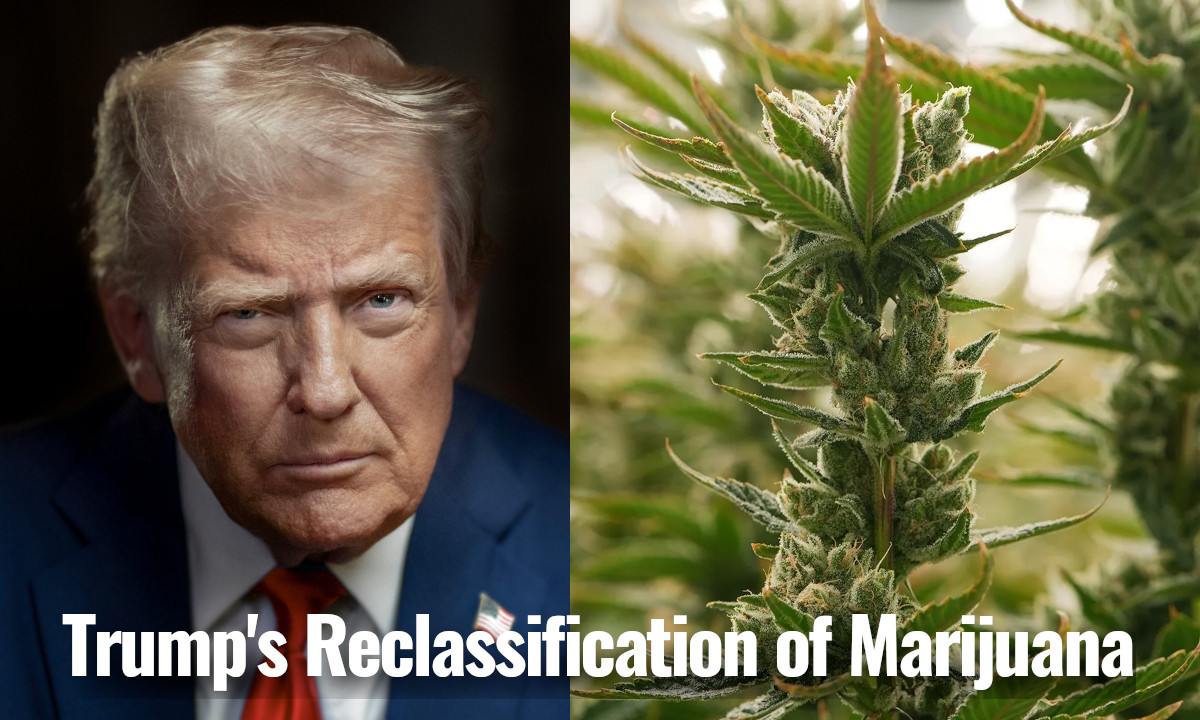
President Trump’s recent decision to reclassify marijuana from a Schedule I substance to Schedule III has generated significant public debate. While I do not believe Schedule III is the ideal classification—Schedule II would, in my view, be more appropriate—I nonetheless support the decision to reschedule marijuana. That position may surprise some, but it is grounded in a practical and regulatory perspective rather than an endorsement of recreational use.
If there is a legitimate medical benefit to marijuana-derived compounds, those benefits should be evaluated and administered in the same manner as any other prescription medication. At present, that is not the case. Marijuana, as it is currently treated under South Dakota law, is not a prescription drug. Instead, the existing framework effectively allows access to marijuana through the purchase of a medical card, often with minimal medical oversight.
A close reading of South Dakota Codified Law 34-20G reveals that the system bears little resemblance to a traditional medical model. Rather than prioritizing rigorous standards for safety, efficacy, and accountability, the law functions as an entry point for large-scale commercial marijuana interests. The result is a system that prioritizes access and profit over meaningful medical regulation.
Reclassification to Schedule III would fundamentally change that dynamic. Under federal law, Schedule III substances fall under the oversight of the Drug Enforcement Administration (DEA), the Department of Justice (DOJ), and, critically, the Food and Drug Administration (FDA). At present, no whole-plant marijuana product has received FDA approval. Without such approval—obtained through clinical trials demonstrating safety, dosage consistency, and efficacy—marijuana cannot be legally prescribed, even as a Schedule III substance.
This distinction is important. FDA-approved cannabinoid medications already exist, such as Epidiolex (CBD-based) and Marinol (synthetic THC), and they were approved only after extensive research and regulatory review. Reclassification would initiate a similar process for marijuana-derived compounds, requiring the identification, isolation, synthesis, and controlled dosing of specific substances such as THC and CBD. This would move marijuana out of an informal, loosely regulated marketplace and into a scientifically accountable medical framework.
Currently, South Dakota’s “medical marijuana” process often places decision-making in the hands of retail employees rather than medical professionals, with little consistency or accountability. Reclassification would eliminate that model. Medical marijuana would no longer be a recommendation; it would be a prescription. That distinction matters. A prescription carries legal and professional liability for the prescribing physician, ensuring a higher standard of care and patient protection.
Additionally, reclassification undermines one of the marijuana industry’s most persistent arguments by drawing a clear legal line between medical and illegal use. Under a prescription-based system, marijuana would be dispensed through pharmacies, not retail storefronts, and only to patients with a valid prescription. Absent that prescription, possession would remain illegal—just as it is with other controlled substances.
Finally, I approach this issue with personal experience. I have witnessed firsthand the negative effects marijuana can have on individuals and families. While I support objective research into both the potential benefits and harms of any substance, it is essential to remain clear-eyed about the motivations of the marijuana industry. This is not a public-health enterprise; it is a profit-driven industry that spent more than $2 billion on advertising nationwide last year.
My hope is that South Dakota’s citizens and legislators recognize the implications of this shift, understand what is at stake, and have the resolve to resist policies that amount to legalized drug distribution under the guise of medicine. A truly medical system demands rigorous standards, accountability, and restraint—and anything less fails the public it claims to serve.